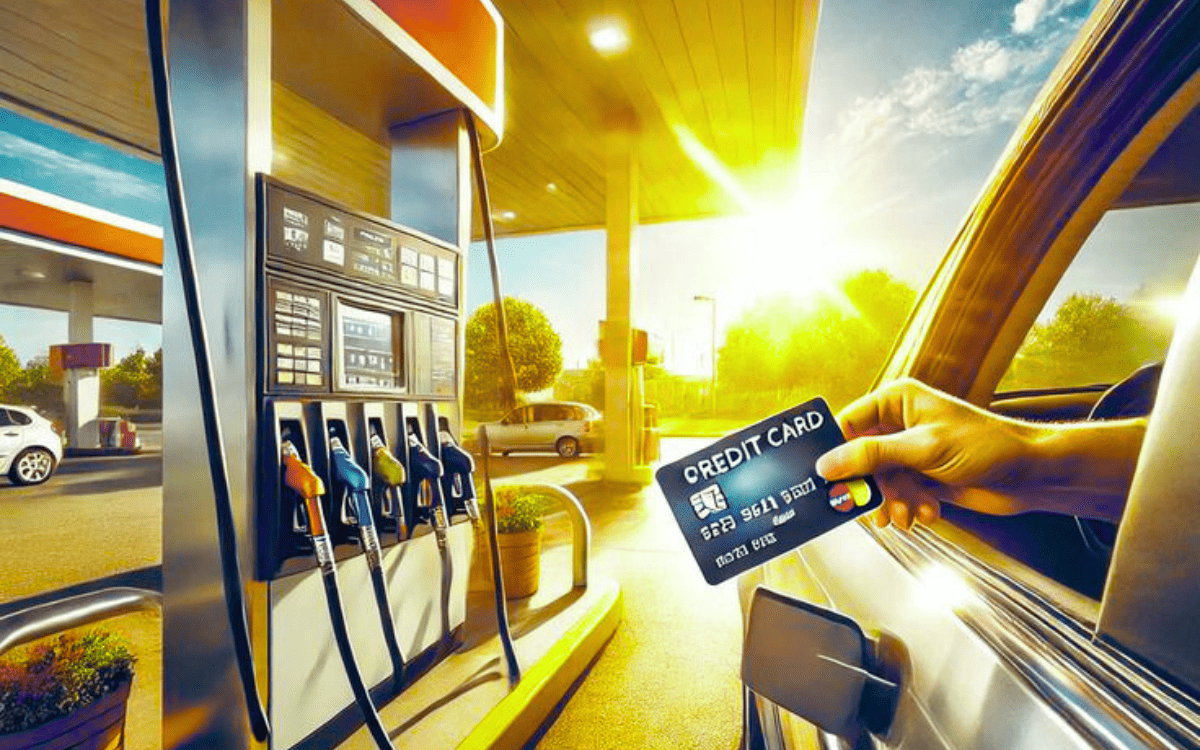
If you are running a box truck or a small fleet of semis in 2026, you know that the fuel pump is where your profits go to die. With diesel prices fluctuating more than ever, paying the «sticker price» at the pump is a rookie mistake that can cost you upwards of $1,000 a month per truck in lost savings.
I’ve talked to owner-operators who still use their personal debit cards to fuel up. Stop doing that. Not only are you leaving money on the table, but you are also making your IFTA reporting a living nightmare.
In this guide, I’m breaking down the best fuel cards for 2026, how «Cost-Plus» pricing actually works, and why the right card is more than just a discount—it’s a business management tool.
1. What Exactly is a Fuel Card? (It’s Not a Credit Card)
A lot of new carriers think a fuel card is just a credit card with a picture of a truck on it. It’s not. A true fleet fuel card is a specialized financial tool that gives you access to wholesale pricing (also known as «cost-plus») at major truck stops like Love’s, Pilot Flying J, and TA Petro.
The «Pulse» Insight: In 2026, the best cards don’t just give you a 5-cent discount. They give you transparency. They show you exactly what the fuel costs the truck stop, and you pay a small margin above that. This is how the big fleets stay profitable, and it’s time you did the same.
Related post
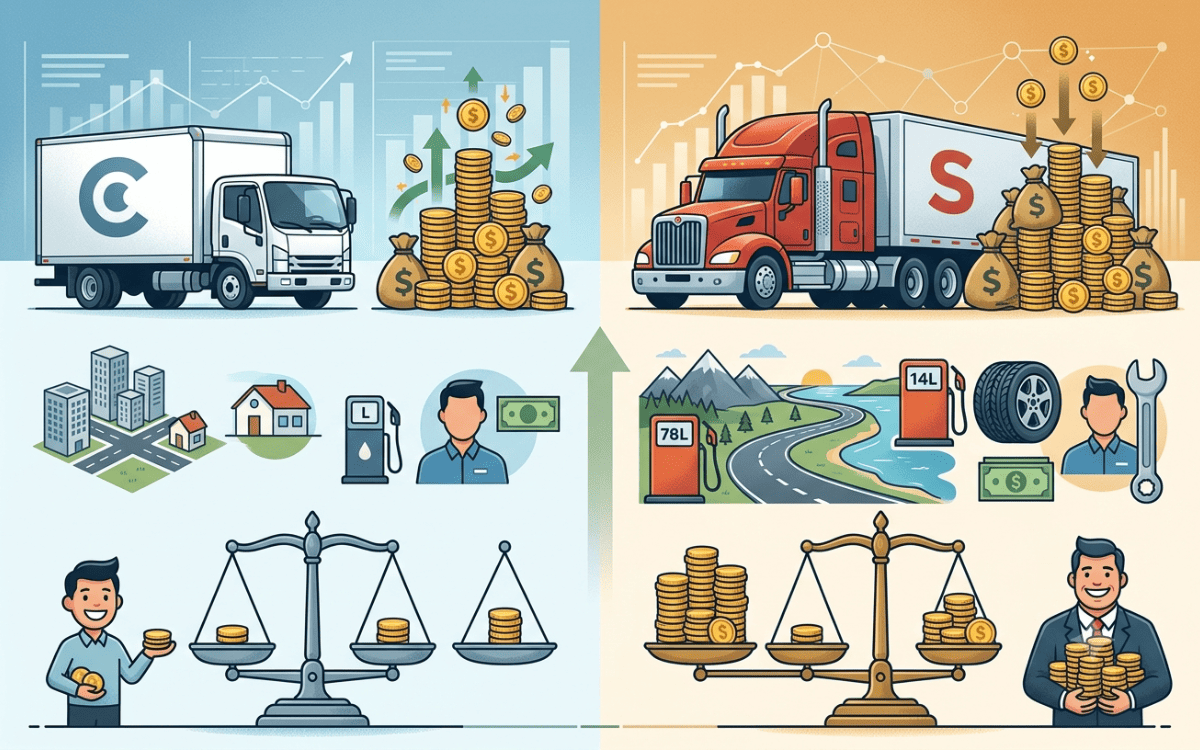
Box Truck vs Semi Truck Business: Which Is More Profitable?
2. Top 5 Fuel Cards for 2026: The Breakdown
#1. RTS Carrier Services: The All-In-One Powerhouse
RTS has consistently been a favorite for small fleets because they combine factoring with their fuel program.
- The Discount: In 2026, RTS users are seeing average savings of $0.40 to $0.60 per gallon at over 2,000 locations.
- Pros: No hidden transaction fees at many locations. Their mobile app is incredibly intuitive, showing you a map of the cheapest fuel «near me» in real-time.
- Cons: To get the absolute best rates, they often want you to use their factoring service as well.
- Best For: New authorities who want a «bundle» of factoring and fuel.
#2. WEX Fleet Cards: The «Universal» Choice
WEX is the giant of the industry. If you want a card that is accepted everywhere (from the giant Love’s to the tiny gas station in rural Iowa), this is it.
- The Discount: Usually smaller per-gallon discounts ($0.05 – $0.15), but much higher volume of locations.
- Pros: Unbeatable reporting. Their IFTA data exports are so clean they’ll make your accountant cry tears of joy.
- Cons: They often have monthly «account fees» if you have a very small fleet (1-2 trucks).
- Best For: Local box truck delivery drivers who don’t always use major truck stops.
#3. Fuelman: The Local Hero
If you don’t do much interstate travel and your box truck stays within a 150-mile radius, Fuelman is likely your best bet for 2026.
- The Discount: Tiered rewards. The more you fuel, the more you save.
- Pros: Great for «mixed fleets» (if you have a box truck and a couple of sprinter vans).
- Cons: Not as effective for long-haul «Over-the-Road» (OTR) savings compared to RTS or NASTC.
#4. NASTC (National Association of Small Trucking Companies)
This is the «secret club» of elite owner-operators. You have to pay a small annual membership fee, but the fuel program (the Quality Plus Network) is legendary.
- The Discount: Often beats everyone else by 2-3 cents per gallon because of their massive collective buying power.
- Pros: You are treated like a big fleet even if you only have one truck.
- Cons: You must attend a safety training course (often online) to join.
- Best For: Serious owner-operators who plan to be in this for the long haul.
#5. AtoB: The Tech-Forward Disruptor
AtoB entered the market a few years ago and has shaken things up in 2026 with a «no-fee» model and instant credit approvals.
- The Discount: Competitive, but their real draw is the User Experience.
- Pros: No credit check options (secured cards) for people with bad credit. They also allow you to pay for repairs, tolls, and insurance with the same card.
- Cons: Their network of «deep discount» stations is still growing.
3. Comparison Table: Fuel Cards at a Glance
| Card Provider | Best For | Accepted At | Avg. Discount (2026) |
| RTS | Startups / Factoring | 2,000+ Major Stops | $0.45+ |
| WEX | Maximum Acceptance | 95% of US Stations | $0.10 – $0.15 |
| Fuelman | Local/Regional | 50,000+ Stations | Tiered |
| NASTC | Professional OTR | Quality Plus Network | $0.50+ |
| AtoB | Tech / No Fees | Universal (Visa) | $0.15 – $0.25 |
4. Understanding «Cost-Plus» vs. «Retail Minus»

This is the part where most truckers get confused. If a card says «Retail Minus 10 cents,» you get 10 cents off whatever is on the sign. Simple.
But «Cost-Plus» is where the real money is.
- Imagine the retail price is $4.50.
- The truck stop’s «cost» (OPIS price) might be $3.80.
- With a Cost-Plus card, you pay $3.80 + a small transaction fee (maybe $0.02).
- Your total: $3.82. Your savings: $0.68 per gallon.
Expert Tip: Always ask your fuel card rep: «Is this a cost-plus program or a retail-minus program?» If they can’t give you a straight answer, walk away.
5. The IFTA Nightmare: How Fuel Cards Save Your Sanity
If you operate a vehicle over 26,000 lbs (or a box truck that crosses state lines), you have to deal with IFTA. In 2026, the IRS and DOT are cracking down on manual logs.
A good fuel card automatically tracks:
- Gallons purchased per state.
- Date and time stamps.
- Price paid per gallon.
At the end of the quarter, you just download a CSV file, upload it to your IFTA software, and you’re done. No more shoeboxes full of faded thermal receipts that you can’t even read anymore.
6. Security and Fraud Prevention: Don’t Get Skimmed
Card skimming at truck stops is a massive problem in 2026. Criminals are getting smarter, but so are fuel cards.
Look for these security features:
- Driver ID/PIN: The card shouldn’t work without a unique PIN.
- Unit Number Prompt: Forces the driver to enter the truck number.
- Odometer Prompt: This is crucial. It allows you to track your MPG (Miles Per Gallon). If a truck suddenly goes from 8 MPG to 4 MPG, you know either the truck is broken or someone is stealing fuel.
- Geofencing: Some cards (like AtoB) only work if the driver’s phone GPS matches the gas station’s location.
7. How to Get Approved with a New MC Number
Getting credit in the trucking industry is hard when your authority is only 30 days old. Here is how I suggest you play it:
- Start with a Secured Card: If your credit is shaky, companies like AtoB or WEX offer «secured» versions where you deposit $500 and get a $500 limit. It builds your business credit.
- Link Your Bank Account: Many 2026 fintech fuel cards use Plaid to look at your cash flow instead of just your credit score. If you have $5,000 in the bank, they’ll give you a limit regardless of your FICO.
- The Factoring Route: If you are already factoring your invoices with a company like RTS, they will usually give you a fuel line of credit immediately because they know they are getting paid by the brokers.
8. Managing Your «Cost Per Mile»

At FreightPulse360, we are obsessed with the «Cost Per Mile» (CPM).
Let’s do the math:
- If your truck gets 8 MPG and you drive 2,000 miles a week, you use 250 gallons.
- Without a card: 250g x $4.50 = $1,125
- With a $0.50 discount card: 250g x $4.00 = $1,000
- Total Savings: $125/week = $6,500 per year.
That $6,500 is your «vacation fund,» your «new tire fund,» or your «emergency fund.» It’s the difference between a business that survives and a business that thrives.
9. Common Traps to Avoid
- Transaction Fees: Some cards give you a $0.10 discount but charge a $5.00 «transaction fee» every time you swipe. If you only put in 20 gallons in a small box truck, the fee just ate your entire discount.
- Network Restrictions: A card that gives you $0.80 off at TA/Petro is useless if your route only has Love’s truck stops. Match the card to your route.
- Late Fees: Fuel card companies are aggressive. One day late can result in a $100+ fee and a frozen card. Always set up Auto-Pay.
Final Verdict: Which Card Wins in 2026?
- For the Long-Haul Owner-Operator: Go with NASTC or RTS. The deep discounts at major truck stops are unbeatable.
- For the Local Box Truck / Sprinter Van: Go with AtoB or WEX. The universal acceptance and ease of use are worth more than the extra 10 cents in savings.
- For the Tech-Savvy Newbie: AtoB is the winner for its «no-fee» structure and easy approval process.
My parting advice: Fuel cards are free to apply for. There is no reason not to have at least two in your visor—one for deep discounts at truck stops and one universal card for emergencies.
Related post

Box Truck vs Semi Truck Business: Which Is More Profitable?
You are standing at a crossroads that every logistics entrepreneur eventually hits. You have some capital, you have your business licenses ready, and you are
Best TMS Software for Trucking and Logistics Companies
Ask any fleet manager or owner-operator what keeps them awake at night, and they won’t just say fuel costs or broker negotiations. They will tell