
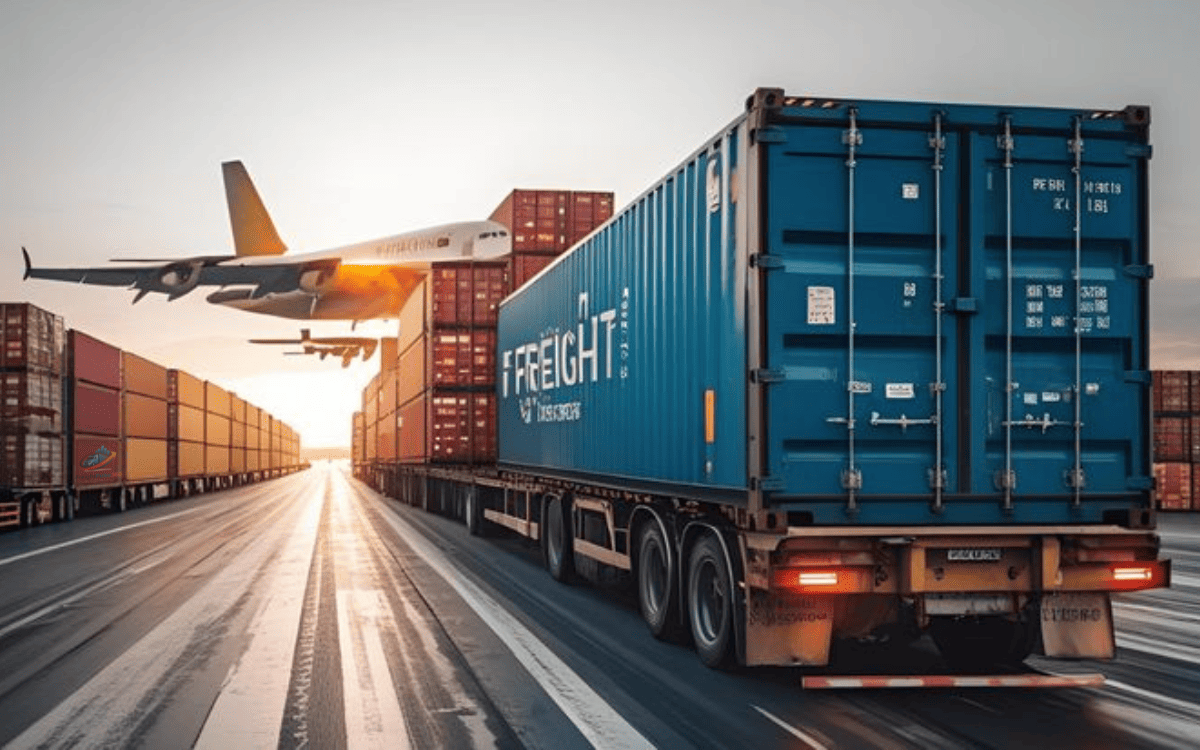
In the fast-paced world of global commerce, moving a product from point A to point B is rarely a straight line. For business owners, importers, and supply chain managers, the logistics landscape is populated by various intermediaries, each promising to streamline the journey. However, two terms are frequently used interchangeably, leading to significant confusion: the Cargo Broker (or Freight Broker) and the Freight Forwarder.
While both act as essential bridges between shippers and carriers, their legal responsibilities, operational methods, and physical involvement with your cargo differ fundamentally. Choosing the wrong partner isn’t just a matter of semantics; it can impact your insurance claims, your shipping costs, and your overall peace of mind.
In this deep dive, we will peel back the layers of these two roles to help you determine which model fits your current business needs.
Defining the Cargo Broker: The Matchmaker of the Road
At its core, a cargo broker is an intermediary. Think of them as the «real estate agents» of the transportation world. They do not own trucks, they do not operate warehouses, and—crucially—they never take physical possession of your goods.
How the Brokerage Model Works
A broker’s primary asset is their network and their information. When you hire a broker, you are paying for their ability to find a reliable motor carrier at a competitive price. They use sophisticated load boards and proprietary databases to vet carriers, ensuring they have the proper authority and insurance.
Legal Responsibility
Legally, a broker’s liability is generally limited to the «arrangement» of transportation. Because they do not issue their own Bill of Lading (BOL) as a carrier, they are typically not responsible for cargo damage or loss unless it can be proven they were negligent in selecting the carrier.
Defining the Freight Forwarder: The Architect of Global Logistics

If a broker is a matchmaker, a freight forwarder is a full-service travel agent for your cargo. Unlike brokers, freight forwarders often take physical possession of the goods. They may provide storage, pick-and-pack services, and consolidation.
The Power of Consolidation
One of the forwarder’s greatest strengths is «assembling» shipments. If you are an SME importing small quantities from three different suppliers in Vietnam, a freight forwarder can receive those three shipments at their local warehouse, consolidate them into a single 40-foot container, and ship it to you as one unit. This process, known as LCL (Less than Container Load) to FCL (Full Container Load) conversion, saves businesses thousands of dollars in ocean freight.
Legal Responsibility
Freight forwarders act as the «carrier» in the eyes of the shipper. They issue their own House Bill of Lading (HBL). This means they take on a higher level of legal responsibility for the cargo from the moment it hits their warehouse floor until it reaches its final destination.
Side-by-Side Comparison: Cargo Broker vs. Freight Forwarder
To help you visualize the operational differences, the following table breaks down the key characteristics of each entity:
| Feature | Cargo Broker | Freight Forwarder |
| Physical Cargo Handling | Never touches the cargo. | Frequently stores, packs, and handles cargo. |
| Documentation | Uses the carrier’s Bill of Lading. | Issues their own House Bill of Lading. |
| Asset Ownership | Non-asset based (Information only). | Often owns/leases warehouses and equipment. |
| Primary Focus | Domestic trucking (over-the-road). | International (Ocean, Air, and Intermodal). |
| Value-Added Services | Real-time tracking, rate negotiation. | Crating, assembly, customs brokerage, storage. |
| Liability | Limited to carrier selection. | Direct liability for cargo loss/damage. |
Understanding the Operational «Flow»
To truly grasp the difference, let’s look at how a shipment moves through each channel.
The Broker Flow
- You notify the broker of a shipment from Ohio to Texas.
- The broker searches their network for a carrier with an empty truck in Ohio.
- The broker negotiates the rate and dispatches the carrier.
- The carrier arrives at your dock, you sign their Bill of Lading, and the truck drives to Texas.
- The broker tracks the truck and handles the billing.
The Forwarder Flow
- You notify the forwarder of 10 pallets in Shanghai.
- The forwarder’s local agent picks up the pallets and brings them to their Shanghai warehouse.
- The forwarder consolidates your pallets with other customers’ goods into a container.
- The forwarder issues you an HBL and books space on an ocean vessel.
- Upon arrival in the US, the forwarder arranges customs clearance and final delivery.
When to Choose a Cargo Broker
Brokers are the «kings of the road» for domestic shipments. If your business primarily operates within North America (USA, Canada, Mexico) and you move full truckloads (FTL) or less-than-truckloads (LTL), a broker is often your best bet.
Real-World Scenario: The Emergency Pivot
Imagine a mid-sized manufacturer in Georgia whose primary carrier suddenly goes bankrupt. They have five loads that must go out by Friday to avoid retailer penalties. A broker can tap into a network of 50,000+ carriers instantly to fill that gap. The speed and flexibility of a broker are unmatched in the domestic spot market.
Benefits for SMEs:
- Access to Capacity: Small businesses don’t have to call 50 trucking companies.
- Cost Savings: Brokers leverage total volume to get lower «contract rates» than a small shipper could get on their own.
- Lower Overhead: You don’t pay for the forwarder’s warehouse space if you don’t need it.
Do you know what the key to efficient supply chain management is?
When to Choose a Freight Forwarder
If your business involves crossing oceans or borders, the freight forwarder becomes indispensable. Their expertise in international regulations, HTS codes (Harmonized Tariff Schedule), and multimodal transport (combining ship, rail, and truck) is vital.
Real-World Scenario: The Complex Import
A startup is importing delicate solar components from Germany. The goods need to be crated specially, stored in a temperature-controlled environment during a customs delay, and then split-shipped to three different distribution centers in the US. A cargo broker is not equipped for this. A freight forwarder, however, manages the crating, the bonded warehouse storage, and the final «last-mile» distribution.
Benefits for SMEs:
- Expertise in Compliance: They help you avoid «demurrage» and «detention» charges at the port.
- Consolidation: Making international shipping affordable for those who don’t ship full containers.
- Single Responsibility: One entity handles the journey from the foreign factory to your door.
The Hybrid Reality: 3PLs and Digital Platforms

It is important to note that the lines are blurring. Many modern Third-Party Logistics (3PL) providers hold both a broker license and a freight forwarder permit. This allows them to act as a broker for your domestic shipments and a forwarder for your international imports.
When vetting a partner, always ask: «Under which authority are you moving this specific load?» This ensures you know exactly who is liable if something goes wrong.
Pro-Tips for Managing Your Logistics Partners
- Verify the MC Number: In the US, every broker and forwarder must have an FMCSA (Federal Motor Carrier Safety Administration) number. Check their status on the FMCSA portal to ensure their authority is «Active.»
- Ask About «Errors & Omissions» Insurance: Since brokers aren’t always liable for cargo, ensure they carry E&O insurance, which protects you if they make a clerical mistake that costs you money.
- Review the HBL Carefully: If using a forwarder, read the back of the House Bill of Lading. It contains the terms and conditions that define the limits of their liability (often based on weight or package count).
- Leverage Technology: Choose partners that offer a digital dashboard. You should be able to see your documents and track your shipments without picking up the phone.
FAQ
Lorem ipsum dolor sit amet, consectetur adipiscing elit. Suspendisse varius enim in eros elementum tristique.
Still have more questions?
ContactConclusion: Making the Strategic Choice
Deciding between a cargo broker and a freight forwarder isn’t about finding the «better» service; it’s about finding the right tool for the job.
If your logistics needs are purely domestic, high-volume, and require maximum flexibility at the lowest price point, a Cargo Broker is your ideal partner. They will keep your goods moving across the highway system with minimal friction.
However, if your supply chain involves international borders, complex documentation, or the need for physical cargo manipulation and storage, the Freight Forwarder is the clear winner. They provide the «end-to-end» security and expertise required to navigate the complexities of global trade.
By understanding these distinctions, you can build a more resilient supply chain, protect your bottom line, and ensure that your products arrive exactly when and where they are needed. Successful logistics is built on clarity—and now you have the clarity to choose your next partner with confidence.
Recent article
 junio 4, 2026
Box Truck vs Semi Truck Business: Which Is More Profitable?
You are standing at a crossroads that every logistics entrepreneur eventually hits. You have some capital, you have your business licenses ready, and you areRead more mayo 30, 2026
Best TMS Software for Trucking and Logistics Companies
Ask any fleet manager or owner-operator what keeps them awake at night, and they won’t just say fuel costs or broker negotiations. They will tellRead more- mayo 30, 2026
Building a Private Trucking Terminal: Property, Layout, and Asset Protection
As your fleet scales past five assets, renting random commercial parking spaces or letting drivers park 80,000-pound combinations at residential properties becomes a major liability.Read more
1 comentario en «Cargo Broker vs Freight Forwarder: Key Differences You Should Know»