
The global logistics landscape is currently undergoing its most significant transformation since the invention of the shipping container. As we navigate through 2026, the industry has moved beyond simple digitization. We are now in the era of «Intelligent Logistics,» where the future of freight technology is defined by a seamless integration of hardware and software designed to solve the age-old problems of transparency, efficiency, and sustainability. For shippers, carriers, and end consumers, the way goods move across the planet is becoming faster, cleaner, and more predictable than ever before.
Understanding the future of freight technology requires looking past individual gadgets and focusing on the ecosystem. We are seeing a convergence of artificial intelligence (AI), the Internet of Things (IoT), and renewable energy sources that are collectively rewriting the rules of the road, the sea, and the air. This shift isn’t just about saving money; it’s about building a resilient supply chain capable of weathering the geopolitical and environmental storms of the mid-21st century.
The Rise of Autonomous and Semi-Autonomous Fleets
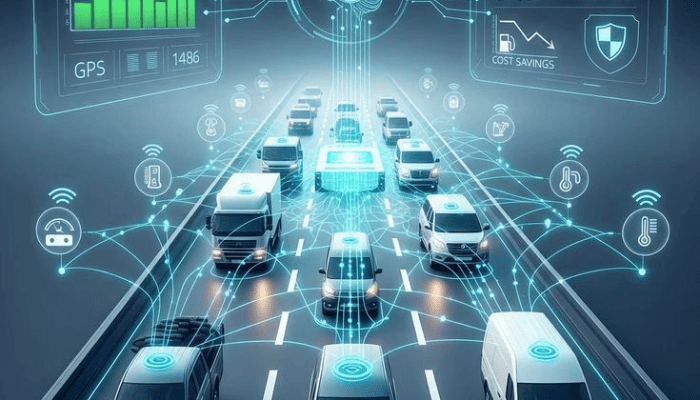
One of the most visible pillars of the future of freight technology is the maturation of autonomous trucking. While the dream of fully «driverless» trucks everywhere hasn’t completely replaced human operators, 2026 has seen the widespread adoption of «hub-to-hub» autonomous hauling. In this model, autonomous rigs handle the long, monotonous stretches of highway between major logistics hubs, while human drivers take over for the «final mile» through complex urban environments.
This technology addresses the chronic global driver shortage while significantly improving safety. Autonomous systems don’t get tired, distracted, or frustrated. They operate at peak efficiency, optimizing gear shifts and braking patterns to save fuel. When we discuss the future of freight technology, we must recognize that autonomy is not just a replacement for labor, but a tool for operational excellence that allows human talent to focus on high-value, complex maneuvers and customer service.
AI and Predictive Analytics: Moving Beyond the Spreadsheet

In the past, logistics was reactive. A ship was late, a truck broke down, or a warehouse ran out of stock, and managers scrambled to fix the mess. The future of freight technology has flipped this script through predictive analytics. Today’s AI algorithms process trillions of data points—from weather patterns and port congestion to social media trends and local holidays—to predict disruptions before they happen.
- Dynamic Routing: AI now recalculates routes in real-time, not just based on traffic, but on «predictive traffic.» It knows that a specific intersection will be congested in 20 minutes and redirects the fleet accordingly.
- Demand Forecasting: Retailers are using the future of freight technology to move inventory before it’s even ordered. By analyzing consumer behavior, companies can position goods in «dark stores» closer to the end customer, enabling delivery times measured in minutes rather than days.
The Electrification of the Last Mile
Sustainability is no longer an optional «green» initiative; it is a core business requirement. The future of freight technology is inextricably linked to the electrification of logistics fleets. While long-haul electric trucking still faces battery density challenges, the «final mile» has gone almost entirely electric in major metropolitan areas.
Electric delivery vans and cargo e-bikes are becoming the backbone of urban logistics. These vehicles are quieter, produce zero tailpipe emissions, and are significantly cheaper to maintain than their internal combustion counterparts. Furthermore, the integration of smart charging infrastructure allows fleets to charge during off-peak hours, balancing the electrical grid and lowering operational costs. The future of freight technology proves that environmental responsibility and profitability can, and must, go hand in hand.
Blockchain and the End of Paperwork
For decades, international shipping has been bogged down by a literal mountain of paperwork. A single overseas shipment could involve dozens of physical documents, leading to delays and opportunities for fraud. The future of freight technology has finally brought blockchain into the mainstream of maritime and air freight.
By creating a decentralized, immutable ledger for every transaction, blockchain provides a «single source of truth» for all parties involved—shippers, customs officials, banks, and carriers. This reduces the administrative time for a shipment from days to seconds. When we analyze the future of freight technology, the «invisible» innovations like blockchain are often the ones that provide the most significant boost to global GDP by reducing friction in international trade.
IoT and the «Visible» Supply Chain
In 2026, a shipment is never «lost.» The future of freight technology has made total visibility a standard expectation. IoT sensors are now small and cheap enough to be attached to individual pallets or even high-value parcels. These sensors do more than track GPS coordinates; they monitor:
- Temperature: Vital for the «cold chain» in pharmaceuticals and fresh produce.
- Humidity: Critical for electronics and sensitive textiles.
- Shock/Impact: Automatically reporting if a crate was dropped or mishandled during transit.
This level of data allows for real-time quality control. If a container of vaccines exceeds its temperature threshold, the future of freight technology alerts the carrier immediately, allowing for intervention before the product is ruined. This reduces waste and ensures that high-quality goods reach their destination every time.
Digital Twins: Simulating the Global Grind
A «Digital Twin» is a virtual replica of a physical supply chain. Companies are increasingly using this future of freight technology to «stress test» their logistics networks. Before a company expands into a new continent or changes its manufacturing hub, they can run millions of simulations on their digital twin.
What happens if a major port closes for a week? What if fuel prices spike by 30%? By using the future of freight technology to simulate these «black swan» events, businesses can build resilience into their physical networks. They can identify the weakest links in their chain and strengthen them before a real-world crisis occurs.
The Human Factor in a Tech-Driven World
There is a common fear that the future of freight technology will render human workers obsolete. However, the reality in 2026 is a move toward «augmented labor.» We are seeing warehouse workers equipped with exoskeletons that allow them to lift heavy loads without strain, and dispatchers using AR (Augmented Reality) glasses to visualize global ship movements in 3D.
The future of freight technology is creating new classes of jobs: drone fleet managers, AI trainers for logistics, and sustainability auditors for supply chains. The industry is shifting from «brawn» to «brains,» requiring a workforce that is tech-literate and capable of managing the complex systems that move our world.
Challenges and Roadblocks
Despite the optimism, freight transport faces challenges. Cybersecurity is the primary concern. As the logistics chain becomes more interconnected, the attack surface for cybercriminals increases. A cyberattack on a major automated port or a fleet of autonomous trucks could have devastating economic consequences. Therefore, robust AI-based cybersecurity is becoming an indispensable component of any logistics technology infrastructure.
Furthermore, there is the «Digital Divide.» While massive logistics giants are rapidly adopting the future of freight technology, smaller carriers in developing nations often struggle with the high initial costs of entry. For the global system to truly modernize, we must find ways to make these technologies accessible across the entire spectrum of the industry.
Circular Logistics and the End of Waste
Finally, the future of freight technology is enabling the «Circular Economy.» Technology now tracks products not just to the consumer, but back from the consumer for recycling or refurbishment. Reverse logistics—traditionally a messy and expensive part of the business—is being optimized by the same AI and IoT tools used for forward delivery.
By tracking materials at a granular level, companies can ensure that valuable components are recovered and reused, reducing the need for raw material extraction. This «closed-loop» system is perhaps the most significant long-term contribution of the future of freight technology to the planet.
Conclusion: A Connected, Intelligent Tomorrow
The future of freight technology is not a destination, but a continuous journey of optimization. As we look at the progress made by 2026, it is clear that the logistics industry is no longer just about «moving boxes.» It is about managing data, energy, and time with unparalleled precision.
The technologies we have discussed—from autonomous fleets to digital twins—are converging to create a global nervous system for trade. This system is more resilient to shocks, more responsive to human needs, and more respectful of the environment. While challenges remain, the future of freight technology offers a roadmap to a world where geography is no longer a barrier to prosperity, and where the movement of goods is as effortless and invisible as the air we breathe.
For those working in the sector, the message is clear: adapt to the future of freight transport today or become a relic of tomorrow. The path ahead is digital, automated, and greener than ever..
1 comentario en «The Future of Freight: How Technology is Reshaping Global Logistics»