
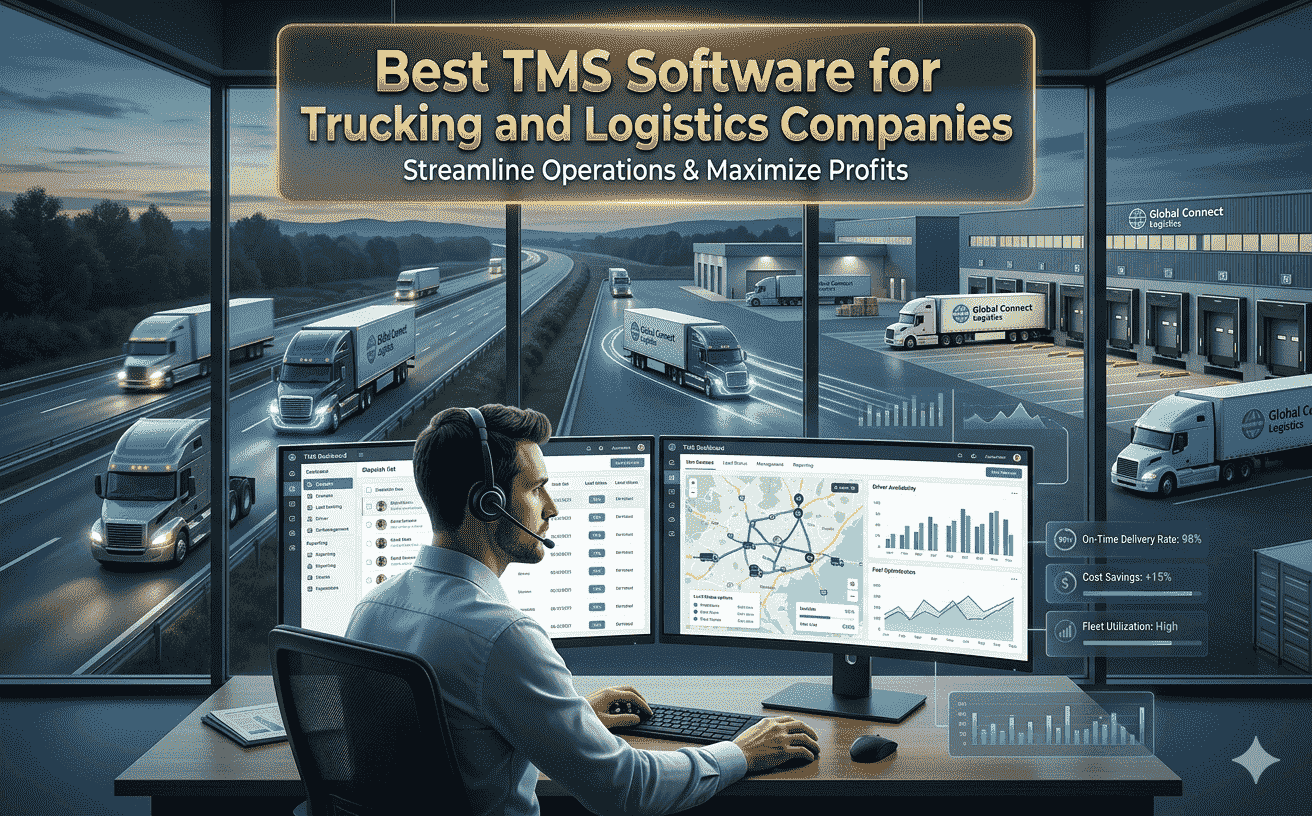
Ask any fleet manager or owner-operator what keeps them awake at night, and they won’t just say fuel costs or broker negotiations. They will tell you it’s the sheer weight of back-office administration. On any given Tuesday, a growing logistics company is balancing a mountain of moving parts: tracking driver hours, dispatching multi-stop loads, monitoring fuel card expenses, checking broker credit scores, managing maintenance schedules, and pushing open invoices through a freight factoring pipeline.
If you are still managing these operations using a patchwork of Excel spreadsheets, dry-erase boards, and text messages, your business is leaking profit. A single missed check-call, a lost proof of delivery (POD), or an unbilled detention window can completely wipe out your margins for the week.
In 2026, a modern Transportation Management System (TMS) isn’t a luxury for mega-carriers; it is the vital operational nervous system for any trucking business that wants to survive and scale. A well-implemented TMS automates your administrative workflows, eliminates duplicate data entry, provides real-time visibility into your true cost per mile, and boosts user retention by keeping your drivers and dispatchers in sync. Let’s break down the best TMS software options on the market, categorized by fleet size and operational structure.
What Actually Makes a TMS «Good»? The Core Architecture
Before you schedule a software demo or input your credit card details, you need to understand the core functionalities that separate a premium logistics platform from a glorified digital ledger. A professional-grade TMS should seamlessly unify three distinct pillars of your business:
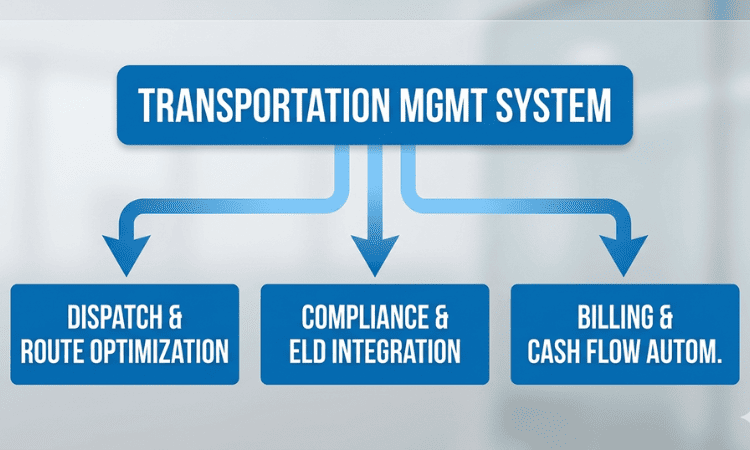
1. Dynamic Dispatch and Route Optimization
Your dispatch screen is your command center. A great TMS allows dispatchers to build, assign, and track loads with minimal clicks. It should feature a clean visual layout that maps out empty trucks (deadhead) alongside available cargo. Advanced platforms integrate with premium mapping tools to calculate low-clearance, truck-legal routing, helping non-CDL box truck operators and Class 8 OTR drivers alike bypass costly road restrictions.
2. Seamless ELD and Telematics Integration
A standalone TMS is a data silo. To unlock true operational efficiency, your software must talk directly to your Electronic Logging Device (ELD) and hardware telematics providers (such as Samsara or Motive). This real-time bridge automatically updates load status tracking for your customers, calculates accurate Estimated Times of Arrival (ETAs), monitors driver hours-of-service (HOS) availability, and pulls odometer data for automated IFTA fuel tax reporting.
3. Integrated Billing and Freight Factoring Pipelines
Cash flow is the lifeblood of trucking. Your TMS should turn a completed load into a clean invoice instantly. The second a driver uploads a signed Bill of Lading (BOL) or POD via their mobile app, the system should generate an invoice, attach the backup documentation, and allow your accounting team to transmit it directly to your direct shippers or your freight factoring solutions platform with a single click.
Top TMS Software Solutions for 2026
Every trucking fleet has a distinct operational fingerprint. A software ecosystem that works perfectly for a cross-country Class 8 refrigerated carrier will completely overwhelm a local, specialized box truck startup. Here is an objective analysis of the top platforms currently leading the market.
1. McLeod Software (LoadMaster)
McLeod is the undisputed heavyweight champion for medium-to-large asset-based carriers and complex enterprise fleets. If you are scaling past 50 trucks and plan to manage multiple corporate entities, brokerage arms, and asset classes, McLeod LoadMaster is the industry gold standard.
- The Operational Edge: The level of customization and deep workflow automation is unmatched. It features incredibly robust accounting modules, detailed maintenance tracking, and enterprise-grade business intelligence reporting that reveals your exact operational yield per mile down to the penny.
- The Catch: It requires a massive upfront capital investment, a steep learning curve, and a dedicated internal IT implementation team to properly build out your custom database structures.
2. Trucking 365 / Axon Software
Axon stands out as a premier real-time trucking accounting and dispatch software system designed specifically for mid-sized transport operations (10 to 100 trucks) looking to streamline complex fleet logistics.
- The Operational Edge: Unlike systems that require you to bridge your dispatch software with an external accounting tool like QuickBooks, Axon features a fully integrated, specialized trucking ERP architecture. When a dispatcher moves a load, the transaction updates the driver’s settlement payroll, updates the customer’s accounts receivable ledger, and logs the IFTA fuel data simultaneously in real time.
- The Catch: The user interface leans toward a traditional, industrial aesthetic that lacks the modern, web-native feel of newer SaaS competitors.
3. Tailwind TMS
Tailwind offers a powerful, web-based software ecosystem that hits the sweet spot for small-to-mid-sized trucking companies and independent freight brokerages navigating the spot market.
- The Operational Edge: Tailwind excels at cross-functional capability. If your business plan involves running your own trucks while simultaneously brokering out excess freight volume to secondary carriers, Tailwind manages both sides of the transaction seamlessly. Its pricing tiers are flexible and accessible for small teams looking to build a profitable small fleet trucking business.
- The Catch: Some users report that its native mobile driver application lacks the advanced document scanning capabilities found in higher-tier enterprise ecosystems.
4. TruckingOffice
If you are an independent owner-operator or a micro-fleet owner with under 5 assets, you don’t need expensive enterprise automation. You need a clean, reliable tool to track your numbers. TruckingOffice is built specifically to address this reality.
- The Operational Edge: It is highly intuitive and can be mastered in an afternoon. It focuses strictly on the metrics that matter to a small carrier: dispatch records, maintenance tracking, invoice creation, and quick IFTA mile calculations. It is one of the most budget-friendly, high-value entry points in the logistics software market.
- The Catch: It lacks advanced API integration capabilities, machine-learning route optimization, and built-in carrier onboarding workflows required by rapidly scaling fleets.
TMS Software Evaluation Matrix
To help guide your software procurement process, let’s look at how these leading solutions compare across critical operational metrics.
| TMS Software | Ideal Fleet Size | Deployment Type | Native ELD Integration | Specialized Trucking Accounting | Best Suited For |
| McLeod LoadMaster | 50+ Trucks (Enterprise) | On-Premise / Cloud | Extensive (All major APIs) | Advanced Internal Modules | Large Fleet Scaling & Dedicated Brokerages |
| Axon Software | 10 – 100 Trucks | Cloud / Hosted | Robust Real-Time Bridge | Complete Built-In Trucking ERP | Mixed Fleets requiring seamless accounting |
| Tailwind TMS | 5 – 50 Trucks | Web-Based SaaS | Mid-Tier Integrations | Integrates with QuickBooks | Hybrid Asset-Light Carrier/Broker Models |
| TruckingOffice | 1 – 5 Trucks (Owner-Op) | Web-Based SaaS | Manual / Basic Sync | Fundamental Profit/Loss Tools | Micro-Fleets keeping administration lean |
The Hidden ROI: How a TMS Drives Fleet Profitability
Investing in a software license can feel like a painful added monthly expense, but a properly utilized TMS functions as a major profit center. Here is exactly where the platform returns cash to your bottom line:
Eliminating the Leakage of Deadhead Miles
Every mile your truck drives empty is a mile that drains your working capital. An advanced TMS maps out your fleet coordinates in real time and crosses that data with your historical lanes. The system automatically alerts your dispatch team if a truck is scheduled to drop a load in a region without an assigned backhaul, allowing them to proactively negotiate cargo long before the driver arrives at the receiver’s loading dock.
Reducing Days Sales Outstanding (DSO)
In traditional trucking setups, getting paid is a slow process. A driver finishes a run, tosses the paperwork on the dashboard, and hands it to the office staff two weeks later when they return to the home terminal. The office then manually creates an invoice, extending your payment timeline significantly.
[Without TMS]  Drop Load ──> Manual Paper Chase (2 Weeks) ──> Manual Invoice ──> Slow Cash Flow
[With Modern TMS] Drop Load ──> Mobile POD Scan (Instant) ──> Automated Invoicing ──> Fast Liquidity
A modern TMS collapses this timeline. The driver scans the POD at the receiver’s dock using their smartphone camera. The software validates the image document, appends it to the electronic dispatch file, and emails a verified billing packet to your customer or factoring provider within minutes of delivery. This rapid processing keeps your business highly liquid and agile.
Mistakes to Avoid When Choosing a Transport Platform
The commercial logistics market is flooded with software options, and picking the wrong ecosystem can paralyze your back-office operations.
Falling for the «All-In-One» Vaporware Trap
Many software salespeople will promise that their platform does absolutely everything perfectly—from routing and dispatch to maintenance, accounting, safety compliance, and driver recruiting. The reality is that no single system dominates every discipline.
It is far better to select a TMS that focuses on premium core dispatching, operational visibility, and invoicing, while featuring an open API architecture. An open API allows your system to connect smoothly with best-in-class specialized applications, such as specialized routing engines, premium ELD systems, and corporate accounting platforms like QuickBooks or NetSuite.
Overlooking the Driver Mobile Experience
You can purchase the most expensive, advanced enterprise management backend available, but if the driver-facing mobile application is buggy, difficult to navigate, or constantly crashes, your system will fail. Drivers are under immense operational pressure on the road. If your software makes it frustrating for them to update load statuses, view routing notes, or upload delivery documents, your data collection pipeline will break down completely, rendering your dashboard metrics useless.
Frequently Asked Questions
Can I run a box truck logistics business using a standard truck TMS?
Yes, most modern platforms can easily manage box truck operations. However, you must ensure that the routing modules within the TMS can be configured specifically for your asset dimensions. The system needs to account for whether your vehicles are non-CDL box trucks under 26,000 lbs or heavy Class 8 equipment, since this directly dictates toll structures, weigh station compliance requirements, and municipal route restrictions.
Do I still need accounting software like QuickBooks if I have a TMS?
Unless you are utilizing a comprehensive trucking ERP platform like Axon that features an entirely self-contained, certified corporate accounting engine, you will still need a general financial tool like QuickBooks or Xero to manage corporate tax filings, balance sheets, and company payroll. Ensure the platform you select features a native, automated sync with your primary accounting software to prevent the nightmare of double-entry bookkeeping.
How long does it typically take to transition from spreadsheets to a new TMS?
For an independent owner-operator or micro-fleet using a web-native, out-of-the-box system like TruckingOffice, onboarding can be completed in a few days. For a mid-sized fleet adopting an integrated system like Axon or Tailwind, you should plan for a structured 30 to 90-day implementation period. This timeline allows your staff to import asset databases, integrate ELD hardware devices, build billing profiles, and run parallel testing cycles to ensure data integrity before retiring your old manual tracking methods.
Are cloud-based SaaS TMS platforms secure for logistics data?
Yes, reputable cloud-based SaaS platforms leverage bank-grade encryption protocols and redundant cloud server architectures to guard your proprietary shipping rates, client databases, driver data, and financial transactions. Operating via a secure cloud environment shields your logistics data far better than hosting it on a vulnerable local office computer or managing it via unencrypted physical spreadsheets.
Taking Control of Your Data
The transportation industry rewards operators who embrace data discipline. Continuing to navigate the high-stakes logistics market without a robust management system leaves your company vulnerable to operational friction and missed revenue windows.
A professional TMS transforms your back office from a chaotic, reactive paper-chase into a streamlined, automated operational center. It gives your dispatchers the visibility they need to keep deadhead miles low, empowers your accounting team to accelerate cash flow velocity, and provides you with the hard metrics required to negotiate confidently with shippers. Stop fighting old administrative battles with outdated spreadsheets—select the software platform that fits your current operational scale, connect your hardware, and drive your logistics enterprise into a highly profitable, scalable future.