

If specialized niches are your ticket away from standard freight commodities, building a Direct-to-Shipper Sales Pipeline is how you permanently disconnect your business from the volatility of public trading screens.
Relying entirely on broker load boards means your equipment operates in a perpetual auction environment. You are forced to compete in real-time against thousands of other carriers, driving spot rates down to bare-minimum survival thresholds. When you bypass the middleman and contract directly with corporate shippers, you secure freight predictability, fixed multi-month pricing, and preferential lane routing.
1. The Financial Impact: Spot Market vs. Dedicated Contracts
Operating on the open spot market exposes your liquid cash reserves to immediate macroeconomic shocks, seasonal volume dips, and fuel cost spikes. Contracted freight provides a financial floor that allows you to accurately budget your variable overhead months in advance.
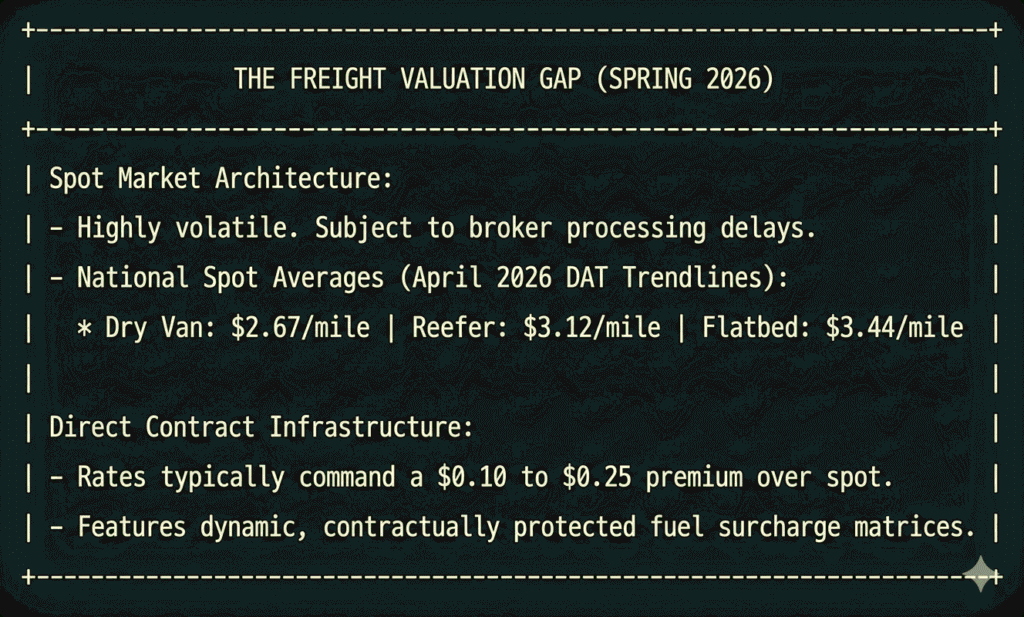
While current spot rates reflect an early-cycle recovery compared to the lows of 2024–2025, they remain incredibly sensitive to operational cost creep. In the contract market, shippers are willing to pay an elevated premium because they are buying guaranteed capacity—the peace of mind that a reliable truck will show up at their loading dock every Tuesday at 08:00 AM, regardless of market conditions.
2. Identifying and Profiling the Ideal Direct Shipper
Amateur fleet managers often waste weeks cold-calling massive Fortune 500 manufacturers (like Walmart, Coca-Cola, or Home Depot). These enterprise giants operate through massive, automated Procurement Management Systems and require millions of dollars in corporate cargo liability insurance before they will even issue a Request for Proposal (RFP).
To build a high-yielding direct portfolio, target Mid-Market Regional Shippers where you can build a direct personal relationship with the person in charge of operations.
The Mid-Market Shipper Profile
- Target Sectors: Local metal fabrication yards, commercial building supply manufacturers, regional plastic extrusion plants, agricultural packaging distributors, and independent food processing hubs.
- The Sweet Spot: Look for operations moving 5 to 20 loads per week. This volume is large enough to require steady, dependable trucking capacity, but small enough that major asset-based mega-carriers (like Swift or Schneider) ignore them.
- The Decision Maker: Look for the Logistics Manager, Shipping Supervisor, or Director of Supply Chain. Avoid calling general purchasing or human resources.
3. The 3-Step Direct-Shipper Acquisition Blueprint
Securing a direct contract requires shifting your messaging away from your equipment specifications and focusing entirely on solving a supply chain problem.
1.Execute Local Field Prospecting:Phase 1.
Drive through industrial parks within a 50-mile radius of your primary fleet terminal. Note the company names on the exterior of manufacturing warehouses and observe what type of trailers are backed into their docks (flatbeds, dry vans, or reefers). Cross-reference these companies on professional networks to extract the direct phone number and corporate email of the shipping supervisor.
2.Pitch the:Phase 2.
When you contact the logistics manager, do not ask them to fire their primary carrier. That creates immediate friction. Instead, position your fleet as their dedicated primary overflow backup. Use this exact framework: «We notice you run lanes out of this facility frequently. Next time your primary carrier drops a load or fails to show up with an empty trailer, call me directly. We keep assets positioned locally to handle your emergencies.»
3.Transition Test Lanes to Dedicated Contracts:Phase 3.
Once they throw you an emergency load to test your operational integrity, execute it flawlessly. Provide proactive tracking updates, drop the trailer precisely on time, and deliver with zero cargo damage. After successfully clearing 3 to 5 overflow loads, leverage your perfect performance metrics to secure a dedicated, multi-month contract for that specific lane.
4. Structuring the Master Shipping Agreement (MSA)
When a shipper agrees to award you a dedicated lane, do not just accept their standard purchase order without checking the fine print. You must negotiate a formal Master Shipping Agreement that protects your operating capital from hidden legal exposures.
Critical Clause: The 30-Day Out
Never lock your assets into a rigid, 12-month fixed-rate contract without an explicit 30-day cancellation clause without penalty. If global supply chain disruptions or local fuel shortages cause operating costs to explode, you must have the structural flexibility to renegotiate your baseline line-haul rates or exit the agreement cleanly.
Key Operational Protections to Include
- Detention Pay Protections: Your contract must explicitly state that if your truck is held at their loading dock for more than two hours, the shipper will automatically pay a mandatory detention fee of $75.00 per hour. This prevents shippers from using your expensive equipment as free warehouse storage.
- Accessorial Cost Accountability: Clearly define who pays for auxiliary over-the-road charges like highway tolls, lumper fees (third-party warehouse unloading labor), tarping requirements, and multi-stop drop-offs.
- Payment Terms Alignment: Negotiate for Net-15 or Net-30 payment structures. If the shipper insists on rigid corporate Net-60 processing cycles, ensure your freight factoring partner has pre-approved that shipper’s corporate credit profile before moving the first load.
Strategic Capacity Allocation Matrix
| Customer Segment | Percentage of Fleet Capacity | Operational Pros | Operational Cons |
| Direct Contract Shippers | 60% – 70% | Guaranteed weekly lanes, high rate stability, predictable routing schedules. | Rigid service windows, high administrative overhead, seasonal volume slowdowns. |
| Premium Asset Brokers | 20% – 30% | Quick transaction velocities, immediate billing processing, minimal sales friction. | Lower average margins, variable lane continuity, exposed to broker credit risks. |
| Public Spot Load Boards | 10% Max | Absolute operational flexibility; useful for clearing unexpected backhauls. | Severe price competition, high risk of empty deadhead miles, zero volume consistency. |
Frequently Asked Questions
Why do shippers prefer working with direct carriers over brokers?
Brokers are intermediaries who take a 10% to 25% margin cut out of the middle of a freight transaction. When a shipper works directly with an asset-based carrier, they cut out the middleman fees. This allows the shipper to lower their total transportation budget while simultaneously paying the carrier a higher net line-haul rate than they would ever find on a public load board.
What is a Request for Proposal (RFP) and how does my fleet participate?
An RFP is a formal corporate bidding event where a manufacturer publishes their upcoming freight lanes for the next 6 to 12 months and invites carriers to submit fixed pricing bids. Small fleets can participate by registering directly in the shipper’s vendor portal or by tracking regional infrastructure bids through local commerce networks.
How do I protect my contract margins if diesel prices experience severe volatility?
You must include a dynamic Fuel Surcharge (FSC) Schedule directly inside your Master Shipping Agreement. This index links your mileage pay straight to the Department of Energy’s (DOE) weekly national retail diesel average, ensuring your per-mile compensation automatically increases if fuel costs spike due to global supply disruptions.
Can I factor invoices from direct corporate shippers?
Yes, most established factoring groups will readily clear and fund invoices generated from direct corporate manufacturers, provided the shipper passes an initial commercial credit check. This allows you to maintain immediate 24-hour liquidity even if the corporate client operates on a standard Net-30 billing cycle.
Building a Resilient Transportation Asset
Transitioning your logistics company away from public spot boards and into direct corporate partnerships is the defining step that separates a fragile trucking startup from a resilient, institutional carrier. By protecting your operational capacity through dedicated lane agreements, structuring your contracts to account for detention and fuel volatility, and maintaining an intentional client distribution balance, you insulate your company margins from external market crashes. Control your lanes, own your client relationships, and run your logistics enterprise with absolute precision.